You are welcome to attend the release of the
Report to Highlight Need for Better Transportation Options ...Officials and transit advocates point to New Haven--Hartford--Springfield commuter rail
WHAT: MASSPIRG is coordinating a press conference to make the case for better public transportation options and release a new report that analyzes the average household's federal economic stimulus rebate compared to the average household's spending on gasoline.
MASSPIRG will be releasing the report with local and state officials, commuter rail advocates, and the regional planning commission to highlight the revitalization of Union Station and proposed commuter rail connecting New Haven to Hartford to Springfield, and eventually all the way to Vermont.
WHO: Phineas Baxandall, MASSPIRG Senior Policy Analyst
Timothy Brennan, Pioneer Valley Planning Commission Executive Director
David Panagore, Chief Development Officer for the City of Springfield
Rebecca Townsend with Pioneer Valley Advocates for Commuter Rail
Cheryl Coakley-Rivera, Springfield State Representative
Kevin Kennedy from Congressman Neal's office
WHY: This month, the average price of gasoline in Massachusetts hit $4.00 a gallon. In response, transit ridership has surged, but too many commuters are without transit options.
With many transit expansion projects planned, high gas prices make it clear that these types of investments must move forward. Plus, the current federal transportation funding system expires in 2009, presenting an opportunity to see more federal funding dedicated to public transportation.
WHEN: Wednesday, June 25th, 2008, 11:30 AM.
WHERE: Springfield Union Station
Monday, June 23, 2008


Monday, June 16, 2008
Subsidies
Reuters has a Q& A with Amtrak President Alex Kummantwith at that link. Among the fascinating things, we find out how much other modes of transportation are subsidized:
Q: Is there a goal for Amtrak to be profitable, and should it be profitable?
A: "I think it is absolute mythology that there's any national system that is profitable. And I think the naysayers just have to get over it. There is no example. If you peel apart the British rail privatization, there were a tremendous numbers of problems with that. People say Oh look at these wonderful new trains running around here. It's all because of the miracle of the private market.' That's complete nonsense. There's a bunch of new trains running around there because they spent five times as much tax money today as they did in 1990. And actually if you look at the subsidy structures, we are awash in subsidies for all modes of transportation. There's a $10 billion a year cash transfer from the general fund to the Highway Trust Fund. FAA gets $2.7 billion. We pay all security at Amtrak and yet there is a $1.5 billion subsidy that goes beyond any user fees for security in air travel.
There's $8 billion that goes into security and life safety for cruise ships. There's four-plus billion dollars that goes to waterways. Let's not even get into airport construction which is a miasma of state, federal and local tax breaks and tax refinancing and God knows what. And then there's private aviation which gets huge subsidies in accelerated depreciation loss for small aircraft. So I always get a good chuckle, if I'm in a good mood, when people talk about subsidized Amtrak. It's always a lot of fun then to reel off every other mode that is subsidized. And one final point. If you actually look at the amount of public capital that flows into the rail network per passenger, it's like $40 a passenger for Amtrak and $500 to $700 per automobile out there through the highways.
One final point is that the network matters. So you can find some juicy little piece of railroad that has just the right density and say Wow we make money here'. But guess what? If you peel that out and privatize it, your costs for running the rest of the network just went up. And it's actually connectivity that matters. So it's an entire network that matters. And if you don't have an entire network, you end up with a ridiculous patchwork of short little lanes of things that make no sense from a national system."
Q: Is there a goal for Amtrak to be profitable, and should it be profitable?
A: "I think it is absolute mythology that there's any national system that is profitable. And I think the naysayers just have to get over it. There is no example. If you peel apart the British rail privatization, there were a tremendous numbers of problems with that. People say Oh look at these wonderful new trains running around here. It's all because of the miracle of the private market.' That's complete nonsense. There's a bunch of new trains running around there because they spent five times as much tax money today as they did in 1990. And actually if you look at the subsidy structures, we are awash in subsidies for all modes of transportation. There's a $10 billion a year cash transfer from the general fund to the Highway Trust Fund. FAA gets $2.7 billion. We pay all security at Amtrak and yet there is a $1.5 billion subsidy that goes beyond any user fees for security in air travel.
There's $8 billion that goes into security and life safety for cruise ships. There's four-plus billion dollars that goes to waterways. Let's not even get into airport construction which is a miasma of state, federal and local tax breaks and tax refinancing and God knows what. And then there's private aviation which gets huge subsidies in accelerated depreciation loss for small aircraft. So I always get a good chuckle, if I'm in a good mood, when people talk about subsidized Amtrak. It's always a lot of fun then to reel off every other mode that is subsidized. And one final point. If you actually look at the amount of public capital that flows into the rail network per passenger, it's like $40 a passenger for Amtrak and $500 to $700 per automobile out there through the highways.
One final point is that the network matters. So you can find some juicy little piece of railroad that has just the right density and say Wow we make money here'. But guess what? If you peel that out and privatize it, your costs for running the rest of the network just went up. And it's actually connectivity that matters. So it's an entire network that matters. And if you don't have an entire network, you end up with a ridiculous patchwork of short little lanes of things that make no sense from a national system."
Next meeting 6/19
Reminder
Our June 19 meeting will be at 7:30, in the Lathrop House Bed & Breakfast at 188 Sumner Ave., Springfield, MA.
Among other items, we will discuss:
-The Future of Transportation Meeting
-A National Corridors Initiative connection
-PVACR's recent meeting with the CT DOT Environmental Assessment team
And, of course, we will discuss how the new Transportation Bond Bill & Amtrak re-authorization affects our work.
Please also keep this on your calendar:
PVACR-MassPIRG event 6/25 11:30am @ Union Station (if you can't come, be sure you watch the news)
Our June 19 meeting will be at 7:30, in the Lathrop House Bed & Breakfast at 188 Sumner Ave., Springfield, MA.
Among other items, we will discuss:
-The Future of Transportation Meeting
-A National Corridors Initiative connection
-PVACR's recent meeting with the CT DOT Environmental Assessment team
And, of course, we will discuss how the new Transportation Bond Bill & Amtrak re-authorization affects our work.
Please also keep this on your calendar:
PVACR-MassPIRG event 6/25 11:30am @ Union Station (if you can't come, be sure you watch the news)
Tuesday, June 10, 2008
Bond Bill 2: The sequel's better than the first
Thanks to Dan Ring for bringing this to our attention:
The House will vote on Bond Bill 2 tomorrow, Wednesday, June 11.
6001-0804 For the purpose of implementing rail improvements under chapter 161C of the General Laws; provided, that funds may be used for transportation planning, design, permitting and engineering for heavy rail, light rail and bus projects, which shall include the Urban Ring, Blue Line extension to Lynn, the Connecticut River Knowledge Corridor Line and South Coast initiatives; provided, however, that that the extension of the Blue Line to Lynn shall be restricted to existing commuter rail rights of way excluding narrow gauge rail line rights of way; provided further, that funds may be used for the acquisition of interests in land; provided further, that $220,000 shall be expended for Phase II disabled accessibility renovations at the rail depot in the town of Athol; and provided further, that $50,000 shall be expended to study the feasibility of constructing a Massachusetts Bay Transportation Authority Commuter Rail station in the town of West Bridgewater.........................$90,000,000
(more to come)
The House will vote on Bond Bill 2 tomorrow, Wednesday, June 11.
6001-0804 For the purpose of implementing rail improvements under chapter 161C of the General Laws; provided, that funds may be used for transportation planning, design, permitting and engineering for heavy rail, light rail and bus projects, which shall include the Urban Ring, Blue Line extension to Lynn, the Connecticut River Knowledge Corridor Line and South Coast initiatives; provided, however, that that the extension of the Blue Line to Lynn shall be restricted to existing commuter rail rights of way excluding narrow gauge rail line rights of way; provided further, that funds may be used for the acquisition of interests in land; provided further, that $220,000 shall be expended for Phase II disabled accessibility renovations at the rail depot in the town of Athol; and provided further, that $50,000 shall be expended to study the feasibility of constructing a Massachusetts Bay Transportation Authority Commuter Rail station in the town of West Bridgewater.........................$90,000,000
(more to come)
Monday, June 9, 2008
Just Take Public Transportation
"...Or taking public transportation."
The Globe's reporting of a survey about gas prices changing travel habits includes that deceptively small line. Public transportation, if available, would enable communities to remain stable, reducing the transient population of talent and creativity, of community-minded folks who also want to work in interesting jobs. Or, let's face it, if the only job you can get is in a place you cannot afford to live in, you are stuck. Look at Western New England.....transportation choices.
The Globe's reporting of a survey about gas prices changing travel habits includes that deceptively small line. Public transportation, if available, would enable communities to remain stable, reducing the transient population of talent and creativity, of community-minded folks who also want to work in interesting jobs. Or, let's face it, if the only job you can get is in a place you cannot afford to live in, you are stuck. Look at Western New England.....transportation choices.
Tuesday, June 3, 2008
Increasing # of Train Commuters

It would be nice to flock to a train to save money and conserve energy.....people in Boston have that option. The Boston Globe has this graphic to accompany their article today about commuters increasing their use of the T:
It seems that Secretary Cohen understands the significance of trains to the region: ""We want to keep these riders," said state Transportation Secretary Bernard Cohen. "It's not good for the region if people try the T and then go back to their cars.""
Thursday, May 22, 2008
trains' benefits & cost of gas
...There is a well known phrase train enthusiasts use to describe the sentimental obsession some have for old trains — "the romance of the rail." But romance, as any pragmatist will tell you, doesn't pay the bills, and advocates know passenger rail will thrive in Maine only if it helps the Maine economy.
"It's a very smart wave of the future," says Patricia Quinn, executive director of the Northern New England Passenger Rail Authority, a quasi-governmental organization created by the Maine Legislature in 1995 to operate the Downeaster. "It has nothing to do with romance and history."
Quinn calls the Downeaster a transit option, just as buses or airplanes are, and says it should be subsidized as part of what she believes is wise public transportation policy.
"We need to diversify, other than just having transportation be highways," says Quinn. "Because as time goes on, and with gas prices going up like they are, it's important to invest in other means of transportation."
Indeed, it may be the death of the road that prompts the revival of the rail. In 2007, when fuel prices began to climb, the Downeaster attracted a record 383,833 passengers, and Quinn expects 2008 will be even better thanks to pain at the pump — she is projecting 418,000 people will take the two-and-a-quarter-hour ride to Boston this year. Due to rising demand, the service recently added a fifth daily trip to the schedule.
Quinn says none of Amtrak's passenger services anywhere in the country turn a profit, and as a public transportation service rail should be supported, as highways are, by dedicated revenue from taxes.
To bolster the notion that rail is an economically important part of a public transit system, Quinn commissioned a report on the economic impact of the Downeaster [SEE VIDEO at that link]. The March report found the Downeaster will generate $3.3 billion in new construction investment in the Portland to Boston corridor by 2030, creating 8,000 new jobs and contributing $55 million in state tax revenue. The report, by the Center for Neighborhood Technology in Chicago, points to the two hotels and a $20 million residential and retail complex completed roughly 200 yards from the train station in Old Orchard Beach in 2006, and the $110 million mixed-use redevelopment of Saco mills currently underway that was prompted by plans to reopen the train station nearby. Extending the Downeaster to Brunswick and Rockland, the report claims, will create an additional $981 million in development, 2,582 new jobs and $16.5 millio n in annual taxes............
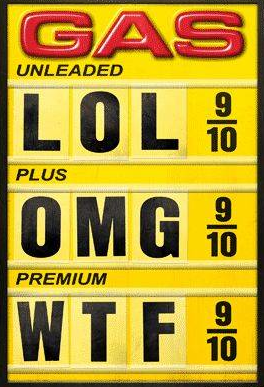
With the cost of gas these days....
....it makes sense to turn to trains.
The Amherst Railway Society has had the right idea...as does the Palmer Railroad Advisory Board.
"It's a very smart wave of the future," says Patricia Quinn, executive director of the Northern New England Passenger Rail Authority, a quasi-governmental organization created by the Maine Legislature in 1995 to operate the Downeaster. "It has nothing to do with romance and history."
Quinn calls the Downeaster a transit option, just as buses or airplanes are, and says it should be subsidized as part of what she believes is wise public transportation policy.
"We need to diversify, other than just having transportation be highways," says Quinn. "Because as time goes on, and with gas prices going up like they are, it's important to invest in other means of transportation."
Indeed, it may be the death of the road that prompts the revival of the rail. In 2007, when fuel prices began to climb, the Downeaster attracted a record 383,833 passengers, and Quinn expects 2008 will be even better thanks to pain at the pump — she is projecting 418,000 people will take the two-and-a-quarter-hour ride to Boston this year. Due to rising demand, the service recently added a fifth daily trip to the schedule.
Quinn says none of Amtrak's passenger services anywhere in the country turn a profit, and as a public transportation service rail should be supported, as highways are, by dedicated revenue from taxes.
To bolster the notion that rail is an economically important part of a public transit system, Quinn commissioned a report on the economic impact of the Downeaster [SEE VIDEO at that link]. The March report found the Downeaster will generate $3.3 billion in new construction investment in the Portland to Boston corridor by 2030, creating 8,000 new jobs and contributing $55 million in state tax revenue. The report, by the Center for Neighborhood Technology in Chicago, points to the two hotels and a $20 million residential and retail complex completed roughly 200 yards from the train station in Old Orchard Beach in 2006, and the $110 million mixed-use redevelopment of Saco mills currently underway that was prompted by plans to reopen the train station nearby. Extending the Downeaster to Brunswick and Rockland, the report claims, will create an additional $981 million in development, 2,582 new jobs and $16.5 millio
 n in annual taxes............
With the cost of gas these days....
....it makes sense to turn to trains.
The Amherst Railway Society has had the right idea...as does the Palmer Railroad Advisory Board.
May 22 Meeting
The PVACR invites you to attend an open meeting at 7:30 pm, at the Lathrop House Bed & Breakast (188 Sumner Avenue, Springfield, MA 01108. Those interested in attending this free meeting are encouraged to Park on the adjacent streets: Forest Park Ave or Washington).

GUEST SPEAKER: Dana Roscoe, Senior Transportation Planner with the Pioneer Valley Planning Commission.


GUEST SPEAKER: Dana Roscoe, Senior Transportation Planner with the Pioneer Valley Planning Commission.

Sunday, April 27, 2008
National Train Day
On National Train Day members of the PVACR will be collecting signatures in support of the NHHS line at Springfield's Amtrak station.

Cars should promote rail, so if you want to get your bumper sticker in support of the line (it looks just like the banner on the www.SpringfieldRail.org site), stop by the Amtrak station to sign the petition. If you won't be available to do this on Saturday, we are arranging for another day too. Of course, you can always contact us at pvacr@yahoo.com to get the bumper sticker and learn how to help.
Cars should promote rail, so if you want to get your bumper sticker in support of the line (it looks just like the banner on the www.SpringfieldRail.org site), stop by the Amtrak station to sign the petition. If you won't be available to do this on Saturday, we are arranging for another day too. Of course, you can always contact us at pvacr@yahoo.com to get the bumper sticker and learn how to help.
Wednesday, April 23, 2008
Save Gas
Save gas--use public transportation.
Joe Wiesenfelder of Cars.com provides this tip and others:
"The biggest fuel savings comes not from hybrid technology but from the old standards: car pooling and public transportation. If you and just one friend or neighbor trade off commuting to and from work, you cut your fuel usage by about 50 percent. No other step will save you as much money. Also, if you have two vehicles in the family motor pool, leave the thirstier one in the garage as often as possible.
Public transportation saves fuel, and possibly money. It also decreases congestion, which saves everyone fuel. Help yourself and everyone else; be part of the solution."
Joe Wiesenfelder of Cars.com provides this tip and others:
"The biggest fuel savings comes not from hybrid technology but from the old standards: car pooling and public transportation. If you and just one friend or neighbor trade off commuting to and from work, you cut your fuel usage by about 50 percent. No other step will save you as much money. Also, if you have two vehicles in the family motor pool, leave the thirstier one in the garage as often as possible.
Public transportation saves fuel, and possibly money. It also decreases congestion, which saves everyone fuel. Help yourself and everyone else; be part of the solution."
Friday, April 11, 2008
Next meeting 4/24
We've been growing. Petition signatures are increasing, and due to our overflow meeting at Starbucks earlier this month, we've been able to get a larger space donated for use for our next meeting.
The Pioneer Valley Advocates for Commuter Rail will have a meeting in late April.
Please bring all completed petitions & updates.
DAY: Thursday
DATE: April 24
TIME: 7:30 PM to 9:00 PM.
PLACE: Lathrop House B&B
188 Sumner Avenue
Springfield, MA 01108
Park on Forest Park Ave. or Washington (adjacent streets). No parking on Sumner Ave.
www.SpringfieldRail.org
pvacr@yahoo.com
Questions? Call Becky at (413) 847 - 0166
The Pioneer Valley Advocates for Commuter Rail will have a meeting in late April.
Please bring all completed petitions & updates.
DAY: Thursday
DATE: April 24
TIME: 7:30 PM to 9:00 PM.
PLACE: Lathrop House B&B
188 Sumner Avenue
Springfield, MA 01108
Park on Forest Park Ave. or Washington (adjacent streets). No parking on Sumner Ave.
www.SpringfieldRail.org
pvacr@yahoo.com
Questions? Call Becky at (413) 847 - 0166
Sunday, April 6, 2008
Updates
What a week! Some points of interest:
1. Pioneer Valley Advocates for Commuter Rail launched a new web page (http://www.springfieldrail.org/)
2. We had great media coverage (Reminder, WWLP, ABC40).
3. Membership from that web page has grown by 19 in the last week.
4. Our meeting at Starbucks on April 3 brought 20 people (not the ones included in the count above).
5. We're now up to 106 signers of the online petition.
6. We've been meeting with many local leaders, some of whom are 100% in support, and some of whom are more cautious about having their names associated with this new $152 economic development initiative.
7. At the caucuses this weekend, we collected 80+ signatures at one, and await figures from the other. Petitions have been distributed to members for collection.
8. the Green City forum went well: One of our members wrote "During the forum, Congressman Neal was asked a question about his support for commuter rail and he had a 5-minute or so discussion about how he supports rail transit and he would like to see a Worcester-Boston link. I went up to him afterward to ask him about NHHS and he said he supports it."
9. That same member had also attended the TIMBY forum, with this report:
"The bulk of the audience was Boston area folk, and most of the discussion centered around MBTA, MassHighway and MTA issues
- Representative Wagner & Congressman Olver were both in attendance.
- Mary MacInnes from the PVTA talked about the various transit projects in the region, including Union Station (and she alluded to US as being a destination for the NHHS line), the Holyoke & Westfield Intermodal stations. She spent the bulk of here time talking about those projects, but she did mention an early study on a Spfld-VT CT line, an EOT study on a Worcester-Spfld line CR and the NHHS line.
- Mike Rennicke from Pioneer Valley Railroad talked about how various states are investing in freight railroad infrastructure by setting up state "banks" and other methods, and he wants MA to help out with the short-haul freight railroad companies as a way of reducing congestion and fuel costs from highway truck traffic.
- Pretty much the issue that dominated discussion was the fact that the MBTA and MTA have huge debt which is eating up all the transportation money right now, and they might very well need a state bailout.
Most of the discussion centered around how infrastructure is crumbling since we don't have much money to fix it (things are better now that the Big Dig is done, but maintenance spending still has reached pre-Big Dig numbers). There was also discussion about debt restructuring (MassTrans), cost cutting and new revenue sources like per use pricing.
What I really took away from the TIMBY conference, with respect to NHHS, is that the biggest obstacle the NHHS faces in Massachusetts is that fact that the state has no money to spend on transporation because the MBTA and MTA are sucking it all up.
The case really needs to be made that the commuter rail will drive economic investment in an area that needs it.
10. We're considering an event for National Train Day. (next meeting tba)
1. Pioneer Valley Advocates for Commuter Rail launched a new web page (http://www.springfieldrail.org/)
2. We had great media coverage (Reminder, WWLP, ABC40).
3. Membership from that web page has grown by 19 in the last week.
4. Our meeting at Starbucks on April 3 brought 20 people (not the ones included in the count above).
5. We're now up to 106 signers of the online petition.
6. We've been meeting with many local leaders, some of whom are 100% in support, and some of whom are more cautious about having their names associated with this new $152 economic development initiative.
7. At the caucuses this weekend, we collected 80+ signatures at one, and await figures from the other. Petitions have been distributed to members for collection.
8. the Green City forum went well: One of our members wrote "During the forum, Congressman Neal was asked a question about his support for commuter rail and he had a 5-minute or so discussion about how he supports rail transit and he would like to see a Worcester-Boston link. I went up to him afterward to ask him about NHHS and he said he supports it."
9. That same member had also attended the TIMBY forum, with this report:
"The bulk of the audience was Boston area folk, and most of the discussion centered around MBTA, MassHighway and MTA issues
- Representative Wagner & Congressman Olver were both in attendance.
- Mary MacInnes from the PVTA talked about the various transit projects in the region, including Union Station (and she alluded to US as being a destination for the NHHS line), the Holyoke & Westfield Intermodal stations. She spent the bulk of here time talking about those projects, but she did mention an early study on a Spfld-VT CT line, an EOT study on a Worcester-Spfld line CR and the NHHS line.
- Mike Rennicke from Pioneer Valley Railroad talked about how various states are investing in freight railroad infrastructure by setting up state "banks" and other methods, and he wants MA to help out with the short-haul freight railroad companies as a way of reducing congestion and fuel costs from highway truck traffic.
- Pretty much the issue that dominated discussion was the fact that the MBTA and MTA have huge debt which is eating up all the transportation money right now, and they might very well need a state bailout.
Most of the discussion centered around how infrastructure is crumbling since we don't have much money to fix it (things are better now that the Big Dig is done, but maintenance spending still has reached pre-Big Dig numbers). There was also discussion about debt restructuring (MassTrans), cost cutting and new revenue sources like per use pricing.
What I really took away from the TIMBY conference, with respect to NHHS, is that the biggest obstacle the NHHS faces in Massachusetts is that fact that the state has no money to spend on transporation because the MBTA and MTA are sucking it all up.
The case really needs to be made that the commuter rail will drive economic investment in an area that needs it.
10. We're considering an event for National Train Day. (next meeting tba)
Monday, March 31, 2008
Approve this Bond Bill
The Republican has this story on the upcoming Bond Bill:
"A $2.9 billion, three-year, state transportation bond bill headed to the House floor for action this week is an urgently needed step to address the commonwealth's deteriorating roads and bridges, lawmakers and regional planners say."
This bill should be approved. But it doesn't have funding for the NHHS line in it, you may note....why do we still think it should be approved? Because we want to be sure the WMASS delegation is prepared to argue for the NHHS line. Right now, they are not--there are too many other pressing needs, for example:
"The bond is a microcosm of the funding needed to ensure safety of roads and bridges across the state, he said. Citing the work of the state Transportation Finance Commission, Brennan said the state will need to spend $15 billion to $19 billion over the next 20 years just to bring existing roads and bridges up to a state of good repair. "That's the situation, and the situation is gloomy," Brennan said."
Fix what needs fixing for safety's sake, and add the project to help the environment, stimulate the economy, and ease transportation problems in the subsequent bond bill. Plus, the state of Connecticut only just recently signed a contract with Wilbur Smith, the firm that will do the environmental assessment....in other words, there's still time left.
"A $2.9 billion, three-year, state transportation bond bill headed to the House floor for action this week is an urgently needed step to address the commonwealth's deteriorating roads and bridges, lawmakers and regional planners say."
This bill should be approved. But it doesn't have funding for the NHHS line in it, you may note....why do we still think it should be approved? Because we want to be sure the WMASS delegation is prepared to argue for the NHHS line. Right now, they are not--there are too many other pressing needs, for example:
"The bond is a microcosm of the funding needed to ensure safety of roads and bridges across the state, he said. Citing the work of the state Transportation Finance Commission, Brennan said the state will need to spend $15 billion to $19 billion over the next 20 years just to bring existing roads and bridges up to a state of good repair. "That's the situation, and the situation is gloomy," Brennan said."
Fix what needs fixing for safety's sake, and add the project to help the environment, stimulate the economy, and ease transportation problems in the subsequent bond bill. Plus, the state of Connecticut only just recently signed a contract with Wilbur Smith, the firm that will do the environmental assessment....in other words, there's still time left.
Wednesday, March 26, 2008
Falling Behind
In the Boston Globe today, New England received a wake-up call.
The new report,
Falling Behind
New England Must Act Now to Reduce
Global Warming Pollution
Suggests that NE must:
Build a more sustainable transportation system for the region that would reduce
emissions by:
o Investing in the region’s rail infrastructure and developing a long-term
rail plan.
o Improving transit in suburbs and smaller cities.
o Encouraging downtown redevelopment in a sustainable, pedestrian
friendly way.
o Supporting transit-oriented, compact residential and commercial
development.
o Reallocating the costs of driving, such as pay-as-you-drive insurance and
elimination of parking subsidies.
o Considering global warming pollution in transportation planning and
development projects.
hmm....perhaps our legislators might want to listen?
The new report,
Falling Behind
New England Must Act Now to Reduce
Global Warming Pollution
Suggests that NE must:
Build a more sustainable transportation system for the region that would reduce
emissions by:
o Investing in the region’s rail infrastructure and developing a long-term
rail plan.
o Improving transit in suburbs and smaller cities.
o Encouraging downtown redevelopment in a sustainable, pedestrian
friendly way.
o Supporting transit-oriented, compact residential and commercial
development.
o Reallocating the costs of driving, such as pay-as-you-drive insurance and
elimination of parking subsidies.
o Considering global warming pollution in transportation planning and
development projects.
hmm....perhaps our legislators might want to listen?
Monday, March 24, 2008
Fuel Cell Locomotives

CT Rep. David McCluskey from New Haven (and Assistant Majority Whip) has an innovative idea regarding the NHHS line: fuel cell technology. in his blog, he writes (emphasis mine):
"The state wants to expand its commuter rail service. Ideally, we should have one seat rides that do not have the long delays caused by switching from diesel to electric service. Unfortunately, the Danbury, Waterbury & the New Haven to Springfield branch lines are not electrified like the main coastal one from the New York state line to the Rhode Island state line. The cost of doing so would be high and would take a long time. However, if we use fuel cell locomotives on the branch lines, including the Springfield to New Haven one, we do not have to electrify the line OR change locomotives to get to New York City."
How would it work? "Fuel cells generate electrical power quietly and efficiently, without pollution. Unlike power sources that use fossil fuels, the by-products from an operating fuel cell are heat and water."
Wednesday, March 19, 2008
Status report on NHHS in MA
Status report:
The Governor filed the transportation bond bill late (supposed to be in June-July). Half of it is money the state is fronting so that the Federal government will reimburse us from federal transportation revenue. It's a traditional style $4 billion transportation bond bill pending for this fiscal year (which is half over), now before the Senate. It contains a dollar amount for the Fitchburg expansion--a worthy project.
There is no money for the NHHS line in this bond bill. While not great, this is OK, since CT has not been as fast as expected in getting a contract for Wilbur-Smith. They have that contract now. The environmental assessment and design study (involving public participation processes) will take 18 months to 2 years.
CT-MA Conversations about NHHS are ongoing (Sec. Cohen spoke about it as a key project at Bradley Conference, high-ranking CONN DOT official speaks about it there too). Oh, and there’s that $40 million federal money for the Springfield Union Station intermodal transportation facility. HDR is working on the design.
The Governor filed the transportation bond bill late (supposed to be in June-July). Half of it is money the state is fronting so that the Federal government will reimburse us from federal transportation revenue. It's a traditional style $4 billion transportation bond bill pending for this fiscal year (which is half over), now before the Senate. It contains a dollar amount for the Fitchburg expansion--a worthy project.
There is no money for the NHHS line in this bond bill. While not great, this is OK, since CT has not been as fast as expected in getting a contract for Wilbur-Smith. They have that contract now. The environmental assessment and design study (involving public participation processes) will take 18 months to 2 years.
CT-MA Conversations about NHHS are ongoing (Sec. Cohen spoke about it as a key project at Bradley Conference, high-ranking CONN DOT official speaks about it there too). Oh, and there’s that $40 million federal money for the Springfield Union Station intermodal transportation facility. HDR is working on the design.
Next meeting 4/3
The Pioneer Valley Advocates for Commuter Rail will meet at 7:30pm on Thursday April 3 at the Starbucks on Columbus Ave. in Springfield.
Interested residents of the Pioneer Valley can learn how they can participate in promoting the New Haven-Hartford-Springfield Commuter Rail line.
The PVACR is advocating that the next version of the Transportation Bond Bill include a line for $30 million to cover the cost of the line. According to a conservative estimate from the Pioneer Valley Planning Commission, this public investment would stimulate an additional $152 million in new economic activity for the Greater Springfield region. Other examples of similar projects, like the ‘Downeaster” line from Maine to Boston, have demonstrated successful intermodal cooperation.
Those interested in the meeting may feel free to contact the PVACR at pvacr@yahoo.com.
Interested residents of the Pioneer Valley can learn how they can participate in promoting the New Haven-Hartford-Springfield Commuter Rail line.
The PVACR is advocating that the next version of the Transportation Bond Bill include a line for $30 million to cover the cost of the line. According to a conservative estimate from the Pioneer Valley Planning Commission, this public investment would stimulate an additional $152 million in new economic activity for the Greater Springfield region. Other examples of similar projects, like the ‘Downeaster” line from Maine to Boston, have demonstrated successful intermodal cooperation.
Those interested in the meeting may feel free to contact the PVACR at pvacr@yahoo.com.
Thursday, March 6, 2008
Join the network: Meeting March 13
The next meeting of the Pioneer Valley Advocates for Commuter Rail will be on March 13, at 7:30pm, at 688 Bliss Road, Longmeadow, MA. For more details, email us at pvacr@yahoo.com.
In the process of letting others know about this meeting, we came across another petition. Ours is here and another one is here. Yet a third is here. That third petition is sponsored by the Massachusetts Commuter Rail Initiative, a fellow organization started from Greenfield. It's clear that in the age of rising pump prices, we cannot afford to stall plans for improved rail any further. We need to act now, and when more of the public speaks up for what we want, things will change.
Who knows? Perhaps one of the following potential new state legislators might speak up for the region???

In the process of letting others know about this meeting, we came across another petition. Ours is here and another one is here. Yet a third is here. That third petition is sponsored by the Massachusetts Commuter Rail Initiative, a fellow organization started from Greenfield. It's clear that in the age of rising pump prices, we cannot afford to stall plans for improved rail any further. We need to act now, and when more of the public speaks up for what we want, things will change.
Who knows? Perhaps one of the following potential new state legislators might speak up for the region???


Thursday, February 28, 2008
Businesses coming...
There are two interesting stories in the news: Liberty Mutual and Socaplast USA.
SPRINGFIELD, Mass.—Liberty Mutual Group announced plans Thursday to hire up to 300 people for a new Springfield office, the second business to announce expansion plans in the city in as many days.........
SPRINGFIELD - Mayor Domenic J. Sarno and economic development officials yesterday praised plans by a Belgian company to open a recycling facility in Indian Orchard, investing $3.4 million and creating about 15 full-time jobs.
Socaplast USA, expects to begin operations in May, in a warehouse at the Solutia Inc. business park at 730 Worcester St., set to become its United States headquarters. Raf van der Perre, chief executive officer of Socaplast Belgium, was among officials participating in yesterday's announcement at City Hall. ......
It seems they'd benefit from having reliable transportation infrastucture so that employees could get to and from work in a fast, reliable way.
SPRINGFIELD, Mass.—Liberty Mutual Group announced plans Thursday to hire up to 300 people for a new Springfield office, the second business to announce expansion plans in the city in as many days.........
SPRINGFIELD - Mayor Domenic J. Sarno and economic development officials yesterday praised plans by a Belgian company to open a recycling facility in Indian Orchard, investing $3.4 million and creating about 15 full-time jobs.
Socaplast USA, expects to begin operations in May, in a warehouse at the Solutia Inc. business park at 730 Worcester St., set to become its United States headquarters. Raf van der Perre, chief executive officer of Socaplast Belgium, was among officials participating in yesterday's announcement at City Hall. ......
It seems they'd benefit from having reliable transportation infrastucture so that employees could get to and from work in a fast, reliable way.
Thursday, February 7, 2008
so far
What a busy time!
* PVACR members handed leaflets to about 150 commuters in Enfield this morning.
* We've had good conversations with companies around the region
* We've had good discussions with local muncipal and state leaders
And all have been positive.
-------
It's also good to see towns planning :
Wallingford to start commuter line plannning committeeMeriden Record-Journal - Meriden,CT,USAWALLINGFORD - The Town Council will create a committee that will consider how the town could begin planning for the upcoming commuter rail line. ...
* PVACR members handed leaflets to about 150 commuters in Enfield this morning.
* We've had good conversations with companies around the region
* We've had good discussions with local muncipal and state leaders
And all have been positive.
-------
It's also good to see towns planning :
Wallingford to start commuter line plannning committeeMeriden Record-Journal - Meriden,CT,USAWALLINGFORD - The Town Council will create a committee that will consider how the town could begin planning for the upcoming commuter rail line. ...
Subscribe to:
Posts (Atom)


